Key Takeaways:
- Markets snapped back last month after a sharp March decline, with tech leading the way
- Volatility remains, oil is near multi-year highs, and consumer sentiment is at record lows
- As investors face one challenge after another, staying invested during market volatility with a risk-aware portfolio is crucial
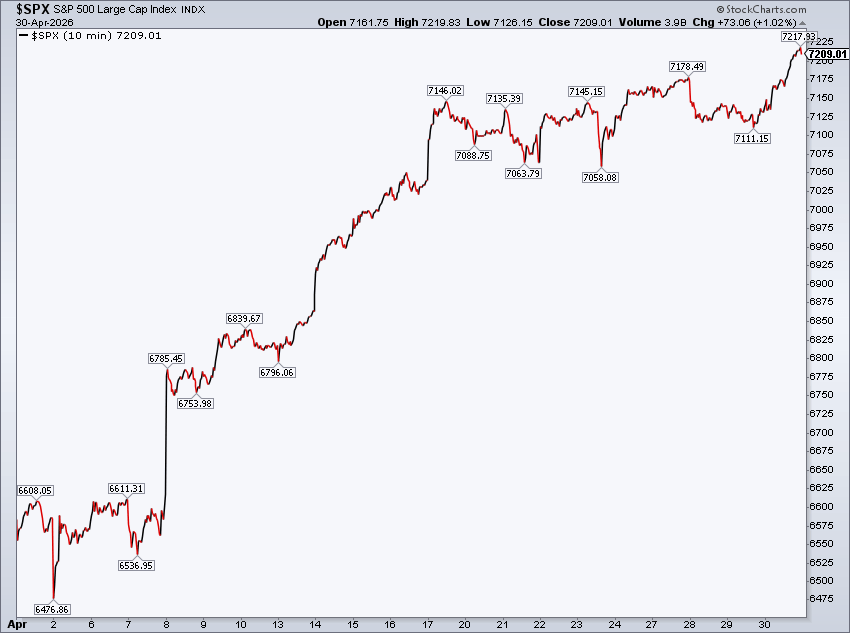
Stocks soared in April. The S&P 500 tallied a 10.4% advance, its second-best April on record (since 1950) and the highest monthly return in six years. The Nasdaq Composite outperformed, posting an eye-popping 15.3% gain.
In short, it was yet another “V-bottom” in markets, as global equities bottomed on March 30 and didn’t look back. Investors who waited for certainty to get back in are likely still on the sidelines.
The S&P 500 Finished April at a Record High
Source: Stockcharts.com
Oil Spikes, Markets Shrug
The conflict in the Middle East continues into its third month. The Strait of Hormuz remains effectively closed, despite social media posts to the contrary in mid-April. Brent crude oil (the global benchmark) hovers above $110 per barrel, and U.S. consumers feel it acutely. The price of a gallon of regular unleaded has hurdled toward $4.50, the highest in almost four years.
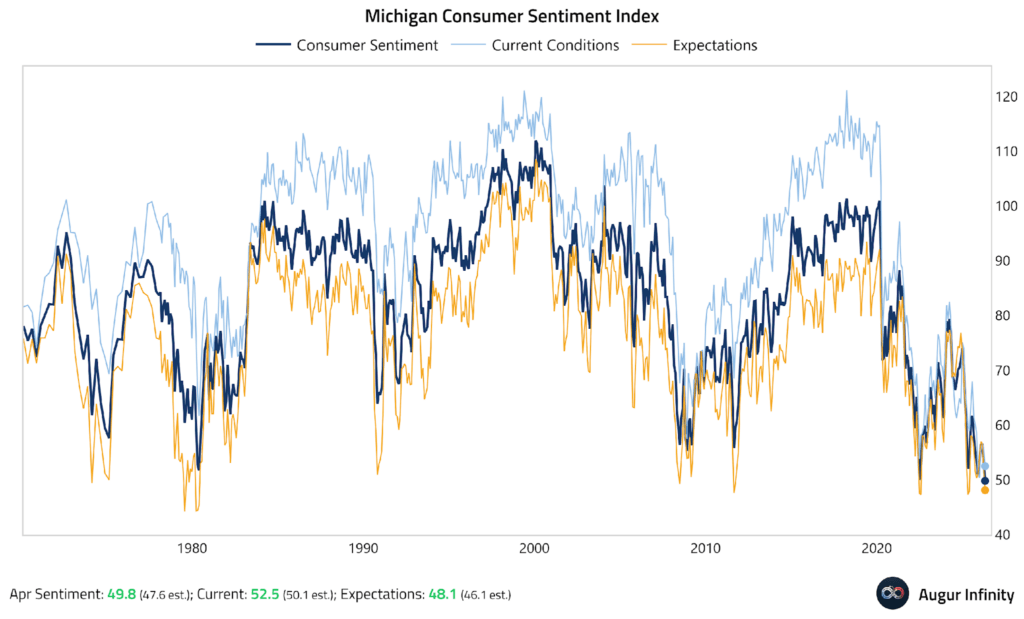
But that doesn’t seem to be dampening household spending. The March Retail Sales report published by the Census Bureau was better than expected, even in the face of record-low consumer sentiment. Wall Street and Main Street haven’t been this at odds with one another in history, given dreadful sentiment alongside all-time highs in the stock market. It’s a reminder that there’s a first time for everything in markets.
Record-Low Consumer Sentiment
Source: Augur Infinity, University of Michigan
Volatility… But in the Bulls’ Favor
For advisors, the case for staying invested during market volatility has rarely been more clearly illustrated than in April. By late March, the S&P 500 neared “correction territory” (down 10% from its January high), with the Cboe Volatility Index (VIX) spiking to a historically high (but not panic-level) mid-30s reading, then reversed course. Entering May, the VIX had dipped below 18. Wall Street’s Fear Gauge remains well above its tranquility range in the low teens.
For investors, it felt like déjà vu all over again, right? A springtime selloff brought about by macro worries was followed by a stunning rally. Swap out “trade war” for “Iran war,” and there were 2025 vibes for sure.
It begs the question: Does the market now have an “all clear” to scale new heights, just as it did 12 months ago? Nobody knows, of course. The key for risk-conscious investors is to stay the course and stick to a balanced portfolio that fits each person’s unique risk and return objectives.
Let’s dive a bit deeper into the markets, the economy, and what may lie ahead.
A Year’s Worth of Gains in One Month
Looking back, March came in like a lion and went out like a lion. It was a brutal month throughout for diversified investors, but it also brought about opportunity (something we discussed last time). April told a different story, it was just about an all-skate across markets. The S&P 500’s double-digit gain to begin the second quarter was buttressed by solid returns among domestic small- and mid-sized companies, along with a 7–8% climb in international equities.
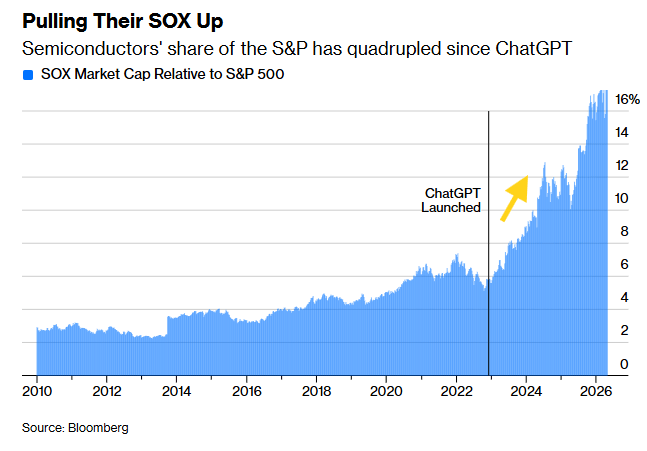
The tech sector drove widespread bullish price action. Remarkably in April, the semiconductor industry scored a staggering 18-day winning streak, matching for the longest in the Philadelphia Semiconductor Index’s (SOXX) more than 30-year history. Yes, big players like NVIDIA took part, but rallies in smaller chip stocks stole the show last month. The SOXX zoomed nearly 50% from March 30 to April 24, a gain that would normally play out over the course of years, not weeks.
Venturing abroad, comparable climbs occurred in Taiwan and South Korea, as those markets are concentrated in a few semiconductor companies. ETFs tracking those countries returned 30% in April.
Semiconductor Stocks Soaring
Source: Bloomberg
AI Powers Earnings Growth & Stock Prices
Those were some of the numbers. The story is that the AI mega-trend is alive and well, despite earlier fears of overinvestment and uncomfortable displacement from emerging technology. Recall that in February, a little-known outfit known as Citrini Research published a dystopian possible economic outcome caused by AI. It was a scary story, but actual numbers reported by major tech firms (and companies from other sectors) suggest that this bull-market engine has shifted into another gear.
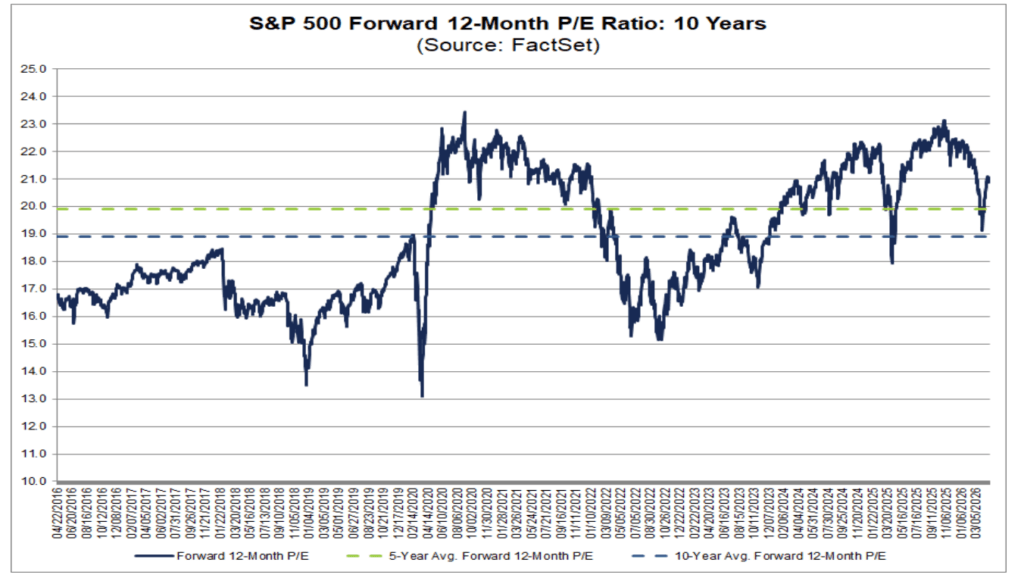
To that point, the first-quarter earnings season blew past analysts’ estimates. While not all companies have reported, the S&P 500’s bottom-line beat rate is well above the five-year average. It’s also the sixth straight quarter of double-digit earnings growth, according to FactSet. In fact, despite the S&P 500 hitting new highs, the index’s price-to-earnings ratio is considerably lower than it was last October. Battle-tested CEOs have navigated choppy macro waters with excellence over the past six-plus years.
The S&P 500’s Price-to-Earnings Ratio Has Dropped from 23x to 21x
Source: FactSet
A K-Shaped Economy: Two Very Different Main Streets
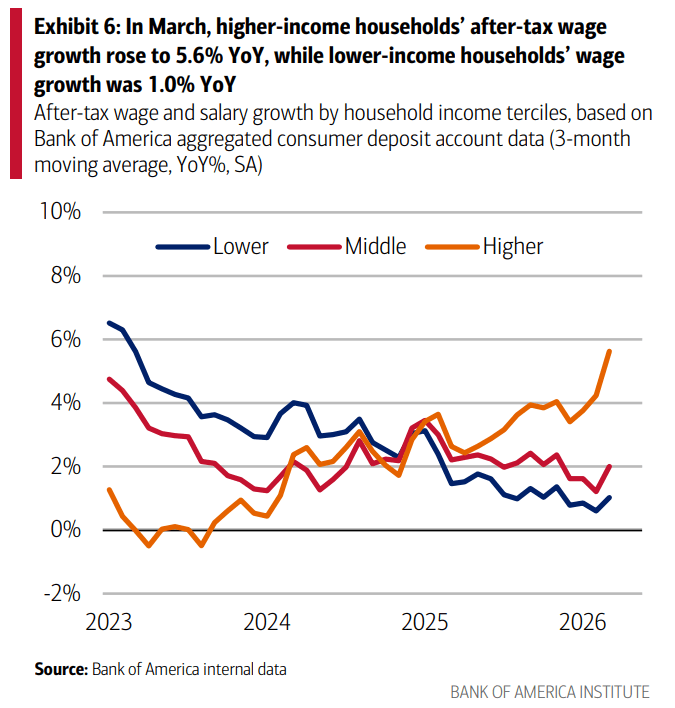
AI is one theme. Another is the resilient American consumer. Much ink has been spilled about the “K-shaped” economy, in which the top 20% of income earners and wealth holders drive most of the spending growth. The bottom half struggles, however. Card spending data confirm it, too. After-tax wage gains among the lower cohort of workers were a tepid 1.0% on an annual basis through March, according to Bank of America. After inflation, that figure is closer to –2%. Higher-income households enjoyed a healthy 5.6% yearly pay bump as of March, easily outpacing the cost of living.
So, it makes sense that despite rising gas prices and stubborn inflation elsewhere, overall U.S. consumption appears strong. What’s more, the jobs market could be on the mend. Recent payroll data suggest hiring strength after a weak end to 2025 and the start of this year. Of course, employment figures are constantly revised, making it tough for economists to decipher signal from noise. The unemployment rate has steadied, though, and that’s one of the few macro data points that is not tweaked over time.
K-Shaped Wage Growth: High-Earners Enjoy Large Pay Gains, Low-Earners Struggling
Source: Bank of America Institute
An Enduring Wealth Effect
There’s a third factor that may be benefiting the economy at the moment, but it’s less concrete than the first two. The so-called “wealth effect” can’t be ignored; the notion that wealthier investors are more likely to spend when they log in to their accounts and see larger balances. This concept aligns with the K-shaped narrative, too.
A Fed In Flux
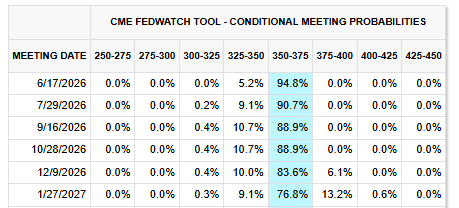
So, which side of the economic tracks are you on? Each person has their own view of the economy. This reality is what the 12 Federal Open Market Committee (FOMC) voting members grapple with daily. With inflation running near 3.5% annually and slower employment growth compared to recent years, the Fed could simply leave its policy interest rate unchanged for the foreseeable future.
Normally, such a condition would make for uninteresting, non-dramatic FOMC meetings and speeches by Fed members. That’s anything but the case right now.
The Fed May Sit Tight: No Rate Cuts or Hikes Priced In for the Rest of the Year
Source: CME FedWatch Tool
Inside the Fed’s Transition Drama
Incoming Fed Chair Kevin Warsh succeeds Jay Powell, effective May 15. Drama is high, however, as Powell breaks with Fed tradition by staying on as a governor for “a period of time.” Recall that the outgoing Fed chief was verbally attacked by President Trump and had a legal case brought against him toward the end of his term as chair.
Powell may look to ensure that Fed independence is preserved as much as possible as Warsh settles into his new role. His sticking around also blocks the president from immediately selecting a new nominee (an individual who might vote for more aggressive rate cuts). We’ll see how it all plays out, and the June 17 Fed gathering could be box-office stuff.
Why Protective Investment Strategies Still Work in 2026
With monetary policy in flux, geopolitical risks unresolved, and consumer sentiment near historic lows, the case for maintaining a protective portfolio remains as relevant as ever.
Yes, there are plenty of theatrics in today’s markets. It’s also clear that risks can emerge unexpectedly. While it’s important to remember no single approach can fully eliminate risk, maintaining a protective portfolio with uncorrelated income and exposures spread across asset classes is important to help support wealth preservation across a range of market environments. Halo Investing’s protective investment solutions are designed to help advisors of all levels manage risk, buffer against unpredictable market downside, and target income generation.
The Bottom Line: Stay Invested, Stay Protected
Markets rebounded in April faster than they plunged in March. Blink, and you would have missed the bottom. That seems to be the evolving norm: sharp declines and even sharper recoveries. Although all investments remain subject to uncertainty, this idea reinforces the challenges of market timing, and highlights why investors may consider portfolios designed with resilience and risk-awareness in mind. Protective investment strategies, like the Structured Notes offered through Halo’s platform, allow advisors and their clients to construct customized allocations and strategies so that all investors can reach their goals with confidence.
FAQ:
Should investors stay invested during market volatility?
Historical patterns — including April’s V-bottom rally — suggest that exiting the market during downturns often means missing the recovery. A risk-aware portfolio with built-in downside protection may be a more effective approach than attempting to time the market, though all strategies carry risk and outcomes are never guaranteed.
What are Protective Investment strategies?
Protective investment strategies are portfolio approaches designed to limit downside exposure while maintaining participation in market gains. The right strategy depends on an investor’s time horizon, liquidity needs, and comfort with the tradeoffs that come with different structures.
How do Structured Notes help investors manage market risk?
Structured notes can be customized to offer defined downside protection, including full principal protection, while still providing exposure to market upside. They are designed to be held to maturity — investors who exit early may receive less than their original principal depending on market conditions at the time. It’s also worth noting that principal protection is contingent on the financial strength of the issuing institution. For investors with a defined time horizon who understand those dynamics, they can be a disciplined way to participate with a known risk profile. Structured notes are available through platforms like Halo Investing, which allows advisors to compare notes across multiple issuers.
Please see our Halo Disclosure Page for important disclosures
An investment in Structured Notes may not be suitable for all investors. These investments involve substantial risks. The appropriateness of a particular investment or strategy will depend on an investor’s individual circumstances and objectives.
Content and any tools discussed are provided for educational and informational purposes only. Halo Investing makes no investment recommendations and does not provide financial, tax, or legal advice. Any structured product or financial security discussed is for illustrative purposes only and is not intended to portray a recommendation to buy or sell a particular product or service.