
The Hedged Equity Strategy
A model allocation framework layering Structured Notes to enhance your existing portfolio strategy.
Find out how this strategy can work for your clients.
–

The biggest difference between institutional, high-net-worth, & retail investors: The Risk Management Gap
Institutions and high-net-worth investors have been using risk-managed strategies for decades to reduce risk, add diversification, and improve their overall risk-adjusted returns. Meanwhile, retail investors have had restricted access to risk-managed solutions—if not left out entirely.
However, financial advisors and their clients have had enough. Today, advisors are overwhelmingly making risk management a more fundamental element of portfolio construction. In a recent survey from Allianz Life, nearly 90% of financial advisors say that it’s more important to manage risk in their clients’ portfolios than it is to have the highest returns.

The Challenge in Modern Portfolio Construction
01
Finally, a level of protection without sacrificing potential upside capture
Source: Halo Investing. For illustrative purposes only. The information does not constitute a recommendation from Halo Investing. There is no guarantee that these objectives will be met.
02
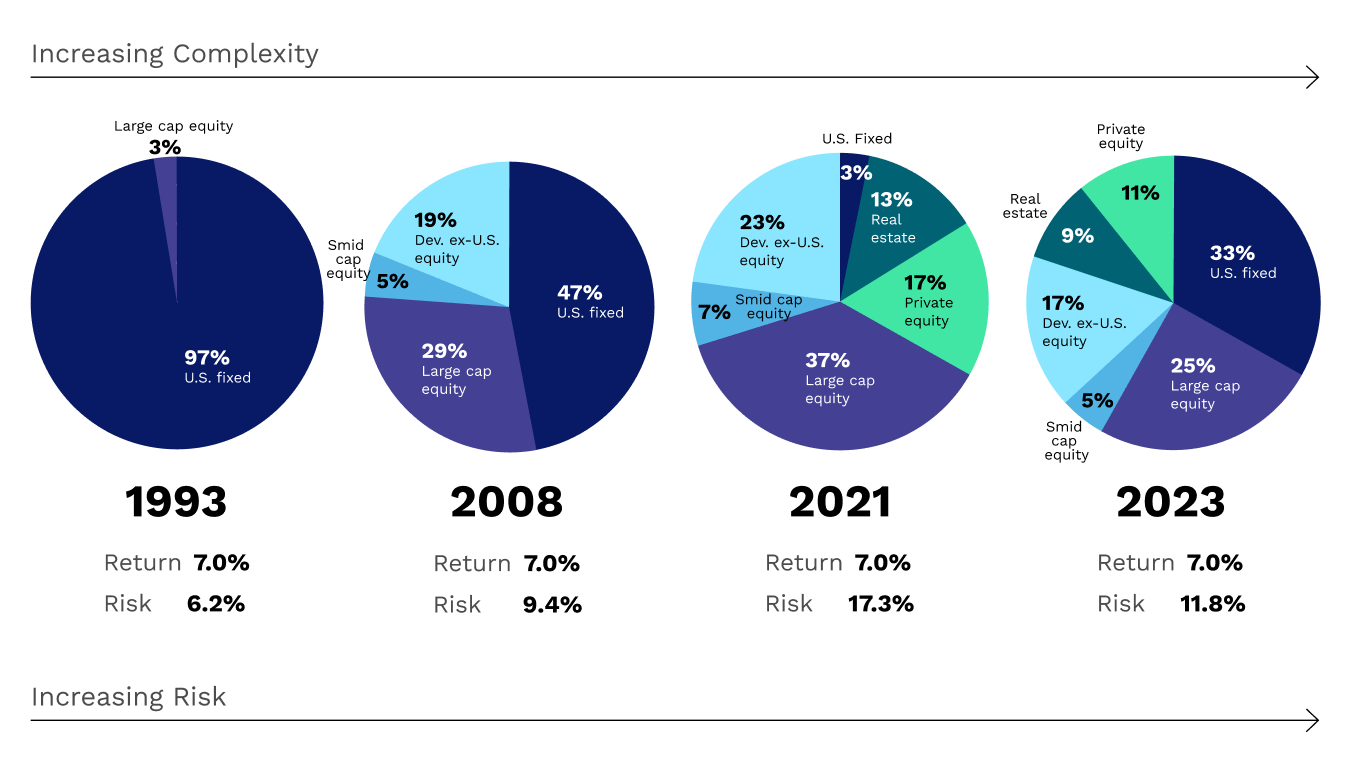
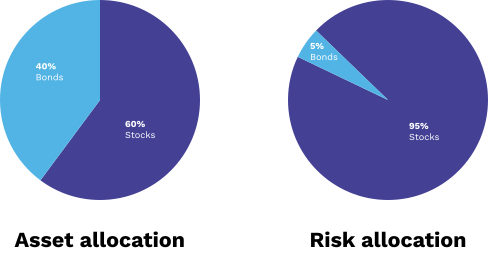
Portfolio diversification with embedded structural downside. Adding more diversification doesn’t reduce risk, but adding the right kind can sure help
Source: Halo Investing. For illustrative purposes only. The information does not constitute a recommendation from Halo Investing. There is no guarantee that these objectives will be met.
01
Finally, a level of protection without sacrificing potential upside capture
Callan Institute – 2023-2032 Capital Markets Assumptions, as of June 2023. Certain information herein has been compiled by Callan and is based on information provided by a variety of sources believed to be reliable for which Callan has not necessarily verified the accuracy or completeness of or updated. This report is for informational purposes only and should not be construed as legal or tax advice on any matter. Any investment decision you make on the basis of this report is your sole responsibility. You should consult with legal and tax advisers before applying any of this information to your particular situation. Reference in this report to any product, service or entity should not be construed as a recommendation, approval, affiliation or endorsement of such product, service or entity by Callan. Past performance is no guarantee of future results. This report may consist of statements of opinion, which are made as of the date they are expressed and are not statements of fact.
Past performance does not guarantee future results, which may vary. This is for illustrative purposes only. T. Rowe Price, Asset Allocation Contribution to Risk: An Insightful Metric for Portfolio Construction, July 2017.
02
Portfolio diversification with embedded structural downside. Adding more diversification doesn’t reduce risk, but adding the right kind can sure help
A Better Hedged Equity
Layering Structured Notes for an Enhanced Portfolio
For decades, institutional and high-net-worth investors have had access to structured products with the potential to improve a portfolio’s risk-reward potential without disrupting core stock and bond allocations.
Due to the complexity of these strategies, small institutions, financial advisors, and individuals have largely been locked out of this approach.
Today, seamless access and education are helping advisors use Structured Notes to mitigate investment risk, enhance portfolio income, and improve a portfolio’s risk/return profile.
Source: Halo Investing. For illustrative purposes only. The information does not constitute a recommendation from Halo Investing. There is no guarantee that these objectives will be met.
How Layering Works
01
Enhanced equity upside potential, with added downside protection
Source: Halo Investing. For illustrative purposes only. The information does not constitute a recommendation from Halo Investing. There is no guarantee that these objectives will be met.
02
An easier way to strengthen your core. Core-Satellite 2.0
03
Getting Started with the Hedged Equity Strategy
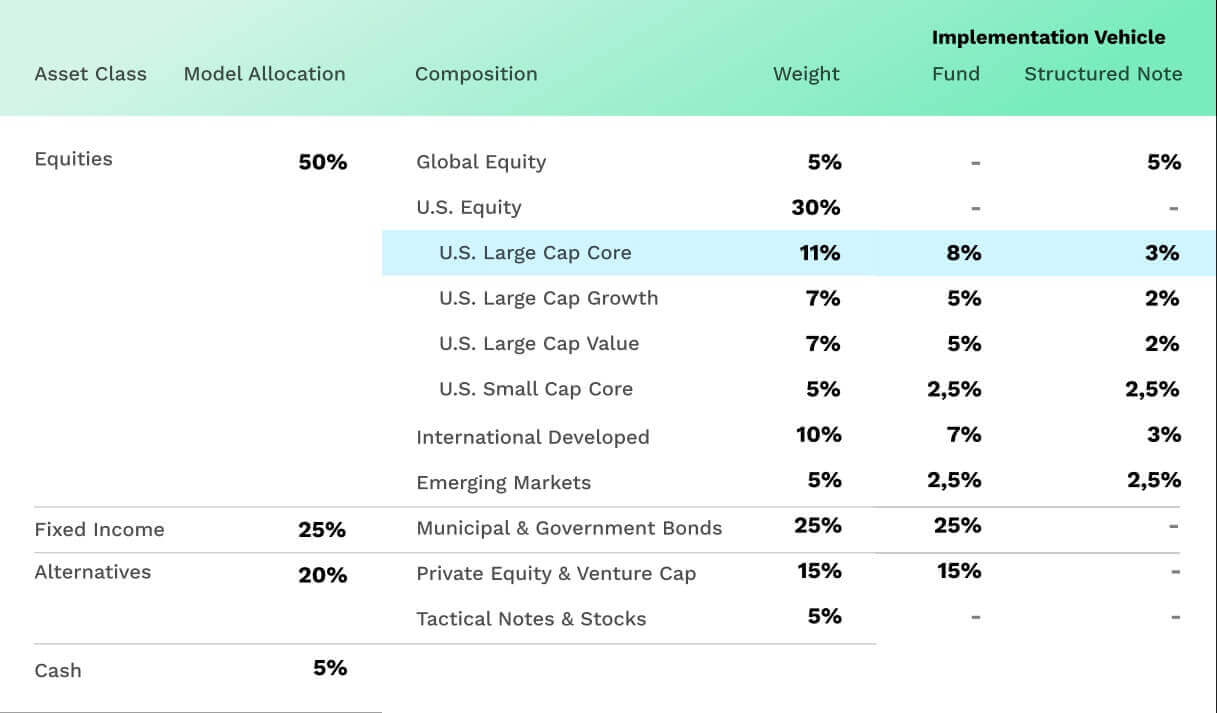
U.S. Large Cap Core is a popular starting point for a reallocation strategy.
- Experience shows that advisors like getting comfortable with how notes work. Starting small promotes stronger commitment from advisors, and clients.
- Utilize the robust team of Halo Specialists to walk through our Halo Model Approach.
- Once an advisor is comfortable with portfolio construction and implementation considerations, consider broader allocations throughout the equity portion of the portfolio.
Source: Halo Investing. For illustrative purposes only. The information does not constitute a recommendation from Halo Investing. There is no guarantee that these objectives will be met.
03
Getting Started with the Hedged Equity Strategy
U.S. Large Cap Core is a popular starting point for a reallocation strategy.
- Experience shows that advisors like getting comfortable with how notes work. Starting small promotes stronger commitment from advisors, and clients.
- Utilize the robust team of Halo Specialists to walk through our Halo Model Approach.
- Once an advisor is comfortable with portfolio construction and implementation considerations, consider broader allocations throughout the equity portion of the portfolio.
Source: Halo Investing. For illustrative purposes only. The information does not constitute a recommendation from Halo Investing. There is no guarantee that these objectives will be met.
Key Benefits

Improve Your Risk-Reward
By “layering” Structured Notes on current equity exposures, clients can enhance upside potential, with an added level of downside protection.

Strengthen Client Portfolios
Improve the investment experience with defined-outcomes and hedge against market risk, performance drag, and the behavioral gap.

Grow Your Book
Strengthen your value-proposition and investment process by unlocking time to build relationships while boosting client retention and satisfaction.
Where do Structured Notes fit in a portfolio?
Closing the Risk Gap
Until recently, most retail investors have been limited to conventional approaches to portfolio construction which typically include a focus on stocks-bonds and mean-variance optimization—all of which seem increasingly unable to satisfy return requirements while also leaving investors exposed to access risk.
While new asset allocation techniques have historically been out of reach for most investors, new platforms such as Halo’s enables forward-thinking advisors to explore asset allocation strategies that can help meet investment objectives with greater confidence.

Portfolio Hedging with Structured Notes
Check out our recent webinar discussing Halo’s Hedged Equity Strategy featuring Halo’s Co-Founder & President, Jason Barsema, alongside Christian Habitz and Robert Bower, CFA from The Invictus Collective.










The information provided here is neither tax nor legal advice and should not be relied on as such. Investment involves risk including possible loss of principal.
FOR INSTITUTIONAL, FINANCIAL PROFESSIONAL, PROFESSIONAL INVESTORS, AND WHOLESALE INVESTOR USE ONLY. This communication should not be distributed, in its current form, to end-investors, and it is for investment professionals only.
The material is for information purposes only. It is not intended for and should not be distributed to, or relied upon by, members of the public.
It is not intended to be a forecast, research or investment advice, and is not a recommendation, or an offer or solicitation to buy or sell any securities or to adopt any investment strategy. The opinions expressed are subject to change. References to specific securities, asset classes and financial markets are for illustrative purposes only and are not intended to be and should not be interpreted as recommendations. Reliance upon information in this material is at the sole risk and discretion of the reader. The material was prepared without regard to specific objectives, financial situation or needs of any investor.
Past performance is not a reliable indicator of current or future results.